When water comes from more than one direction, fixing one puddle at a time usually moves the problem. A whole-yard plan solves it once and keeps the lawn from being dug up twice.
Some yards have one wet spot with one cause. Many have several: roof water landing at two corners, a low area in the back, a side yard that never dries and a neighbor’s slope draining onto the lot. Solving those one at a time often means digging the same lawn twice, or moving a puddle from one place to another. Rein Irving Drainage Company plans yard drainage as a system: every source mapped, one outlet chosen, and each part sized and placed so the whole thing works together.
Map every source first
A system plan starts with where water enters the lot and where it goes now. On the site visit we look at:
Roof water. Which downspouts discharge where, and how much roof drains to each. Each inch of rain on 1,000 square feet of roof is about 620 gallons.
Surface flow. Which way the ground slopes, where water stands after rain and how long it lasts.
Soil water. Whether ground stays soft for days, which in central Irving usually means rain perched on clay a foot down.
Neighbors and the street. Higher lots, a new house on a raised pad, sprinklers next door and street water running up the driveway.
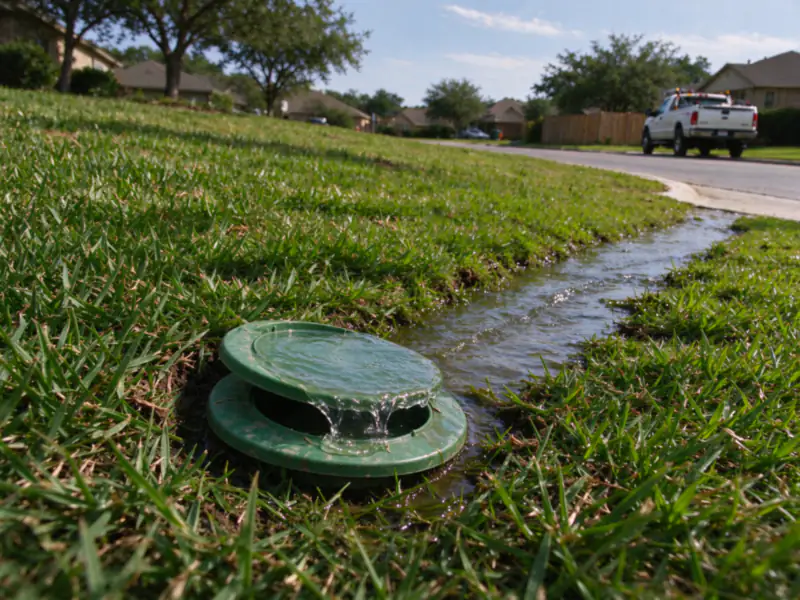
Leaks. A leaking sprinkler valve can keep a strip of lawn wet in dry weather, so we rule it out early.
The outlet is the most important decision in a yard drainage system, because every branch has to fall toward it. Around Irving the common choices are a curb core through the street curb, the alley line, a grassed swale toward the street, a pop-up emitter in a lower part of the lawn, and a pump where no gravity outlet exists.
City rules shape that choice. University Park requires roof drainage to be piped through the curb or to the alley line. Coppell has issued residential curb cores for yard drains as engineering permits. Grand Prairie prohibits concentrating runoff onto a neighboring lot without an easement or a recorded release. For Irving addresses we confirm the requirement before work starts. The outlet guide compares the options in detail.
Roof water and soil water stay in separate pipes until they reach the main line, because a burst of roof water poured into a French drain floods its stone. Surface inlets and buried downspouts can share solid pipe.
Sizing for Irving storms
The DFW area averages about 37 inches of rain a year, but drains overflow in bursts. NOAA’s Atlas 14 puts Irving’s 2-year storm at 1.77 inches in one hour and its 10-year storm at 2.52 inches in an hour. A 2,000 square foot roof in the 2-year hour sends roughly 2,200 gallons to its downspouts, so the main line downstream of several downspouts and basins needs real capacity and an overflow route for the storm that exceeds it.
Pipe that lasts in clay
Thin corrugated pipe in a fabric sock is cheap and quick, and in Irving clay it tends to crush or silt up. A system meant to last uses smooth-wall pipe for conveyance, nonwoven fabric around clean stone where a French drain section is needed, and cleanouts at turns and junctions so lines can be flushed. Joints are connected with fittings, not tape.
How the plan is delivered
We draw the system on a site sketch: each source, each inlet, the pipe routes and fall, and the outlet. You see which part solves which problem before anything is priced. Large systems can be priced as phases, with the main line and outlet first, and each later phase tying into it. The sketch also records where every line runs and how deep, so a future patio, pool or fence does not cut through it by mistake.
How the work runs
811 locate before digging; paint and flags appear in the yard a few days later.
Layout of trench lines, basin locations and the outlet, with sprinkler lines noted.
Main line and outlet first, so every branch has somewhere to go.
Branches: downspout lines, basins and any French drain sections.
Water test from the far end of each branch before backfill.
Restoration: backfill, sod, sprinkler repairs and haul-off of spoil.
Rein Irving Drainage Company plans and manages each job; installation is carried out by licensed and insured drainage contractors we work with. The guide to what happens during installation covers the day-by-day view.
What a system costs
Yard drainage systems are priced by their parts. As a guide, a standard French drain section runs about $25 to $55 per foot installed in the Dallas area; catch basins about $500 to $1,500 each and buried downspouts about $150 to $350 each as national budgeting ranges. The total depends mostly on the outlet distance, how many inlets there are and what has to be restored. The drainage cost guide breaks it down, and the cost tool gives a quick range.
Buying or selling a house with drainage issues
Drainage items appear on Texas inspection reports often. A system plan with a written scope can turn a vague inspection note into a defined repair, which helps in a negotiation. See buying a house with drainage problems.
What this work looks like
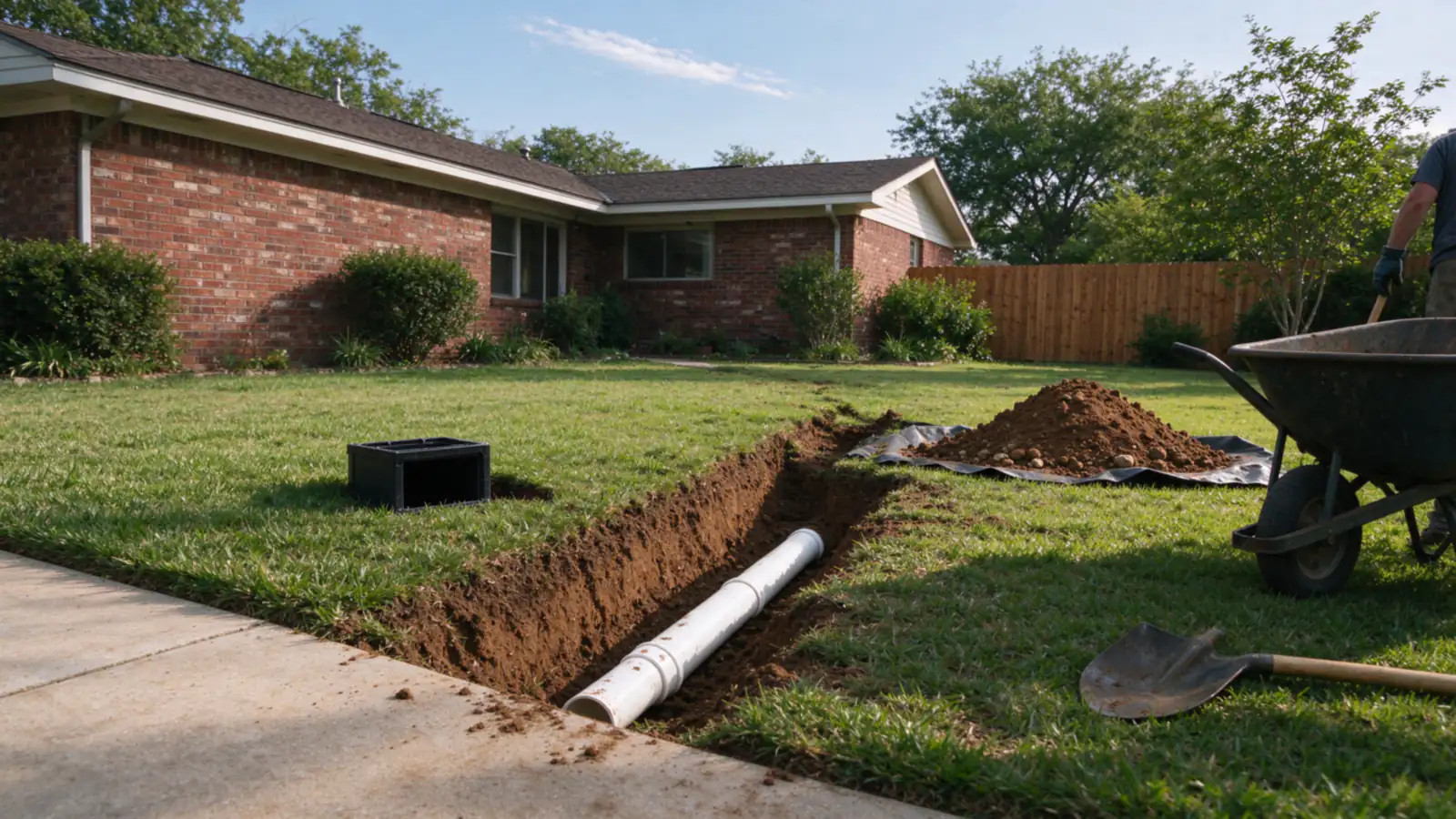
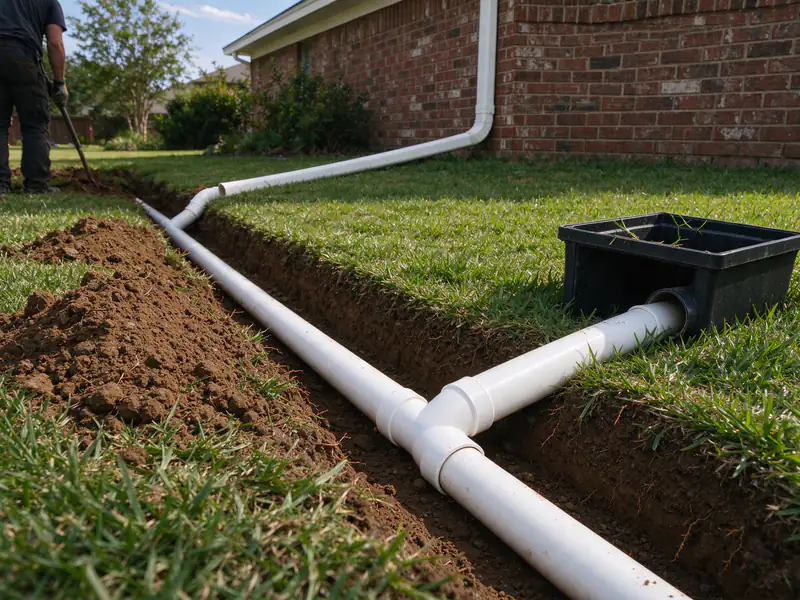
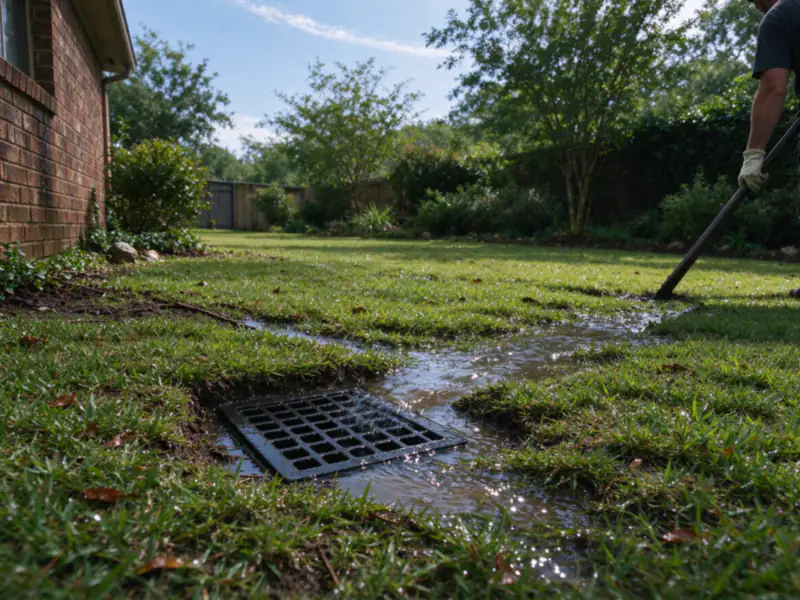
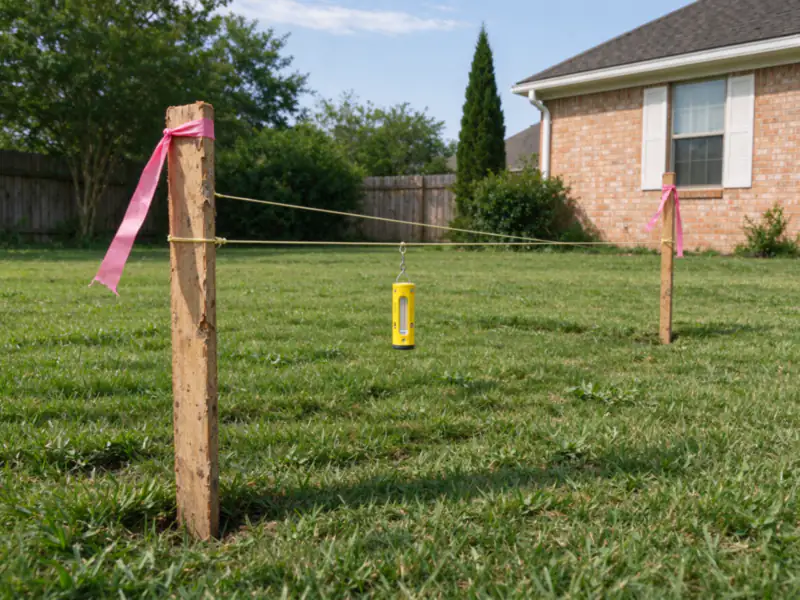
Downspout line and catch basin pipe joining at a wye fitting in an open trenchRainwater running across a lawn into a flush catch basin grateGrade stakes with pink flagging and a string line with a line level across a backyardPop-up drainage emitter releasing water across a lawn that slopes toward the street
Questions people ask
What is the difference between a yard drainage system and a French drain?
A French drain is one component that collects water from the soil. A yard drainage system is a plan that may combine buried downspouts, catch basins, a French drain, regrading and one shared outlet, each placed where it solves a specific source.
Can a whole-yard drainage system be built in stages?
Yes. The plan sets the outlet and main line first, and later stages tie into it without reopening finished work. Building the main line first usually makes each later stage smaller.
What size pipe does a yard drainage system need?
Smooth-wall 4 inch pipe handles most single-family branches; main lines that carry several downspouts and basins are sized for the roof and lawn area feeding them during a burst storm, not an average rain.
Do you need my property survey?
It helps. A survey shows property lines, easements and the lot's original grading pattern, which affects where water may legally go. If you do not have one, we work from measured elevations on site.
Will a yard drainage system affect my sprinklers?
Trenches often cross sprinkler lines. Crossed lines are repaired as part of restoration, and heads near new grates are adjusted so they do not spray straight into the drains.
Water coming from more than one place?
Send photos from a few angles and your address; we will map the sources first.