Most drainage problems start with ground that slopes the wrong way. Reshaping it is often the simplest fix, and every pipe in the yard depends on it.
Every drainage system starts with the shape of the ground. If the soil around a house slopes toward the slab, or a backyard has a dip with no way out, water will collect there no matter how many pipes are buried nearby. Rein Irving Drainage Company regrades yards so the surface itself moves water: away from the foundation first, then along swales toward an outlet the property is allowed to use.
Why grade comes first
Water runs downhill along the surface long before it soaks in, especially on Irving clay. In Las Colinas and much of north Irving, the USDA soil survey maps Ferris and Heiden clay, about half clay particles and extremely slow to absorb water. On ground like that, nearly every storm’s rain moves across the surface. Getting the slope right fixes most of it, and it makes every other part of a yard drainage system smaller, since pipes only have to handle what the grade cannot.
Grade usually goes wrong in a few predictable ways:
Flower beds built up above the lawn, with edging that holds water against the house.
Soil settled along the foundation, so the first few feet now dip toward the slab.
Fill added for a patio, a playset or a new fence line that blocks the old drainage path.
A neighbor’s new grade or a new house on a raised pad that now sheds onto your lot.
Sod laid on top of sod over the years, slowly raising the lawn above the outlet.
Slope targets
Area
Typical target
Why
First 10 ft from the foundation
About 6 in of fall (roughly 5%)
The common code standard for moving water off the slab
Open lawn
At least 1 to 2% toward an outlet
Enough for water to keep moving on clay
Swale bottom
Steady fall, no flat spots
Flat sections hold water and turn soft
Paved areas
At least 0.5%
Paving sheds water faster than soil
Local codes set their own minimums. Grand Prairie, for example, calls for at least 1 percent fall on earthen surfaces and 0.5 percent on paved ones. The slope guide explains how to check your own yard with a string line and a level.
Swales and dry creek beds
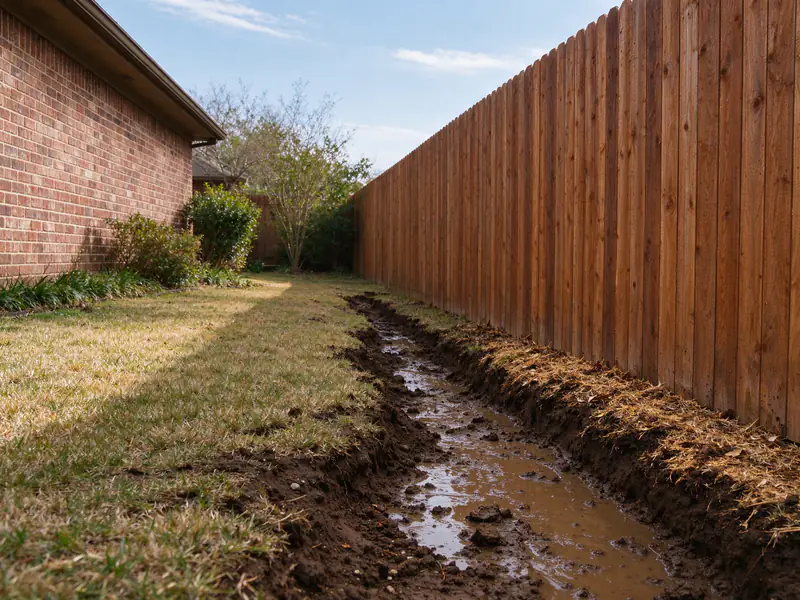
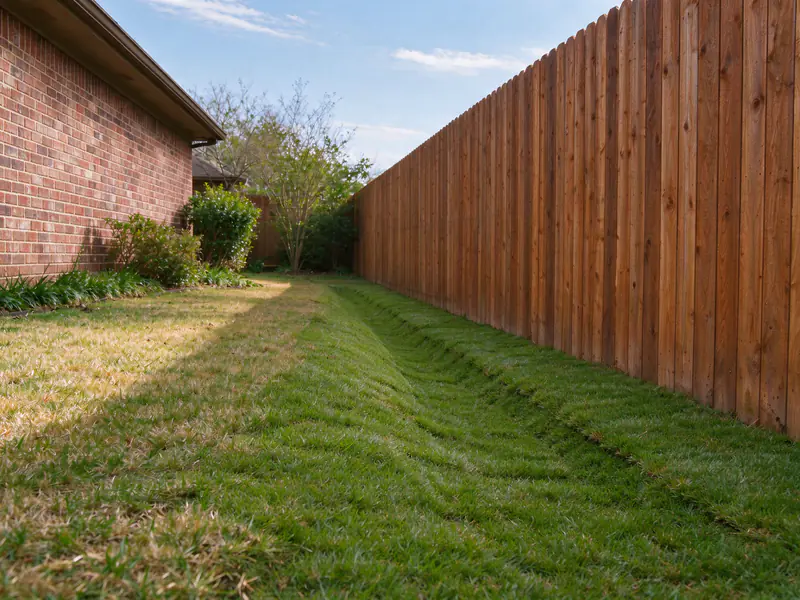
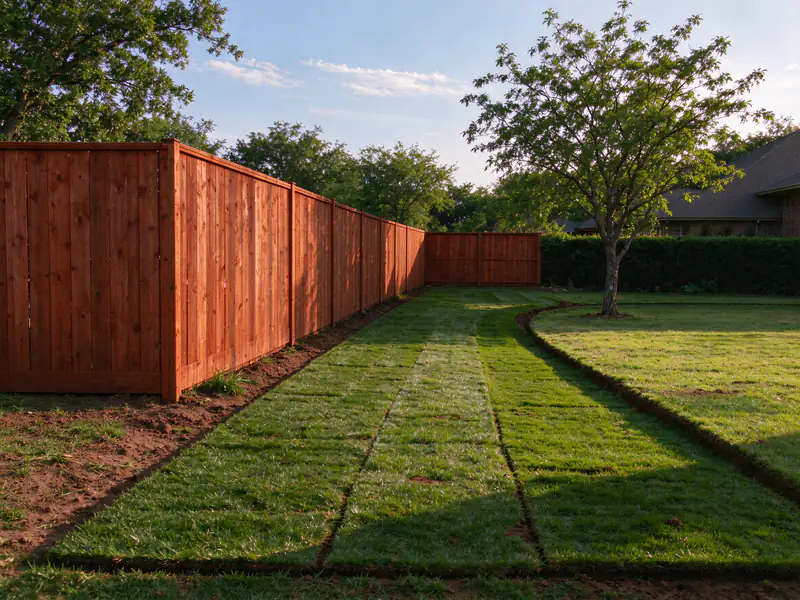
A swale is a shallow, wide, grassed channel that carries water along a property line or across a yard toward the street, the alley or a lower point. Done well, it is barely visible: a gentle dip you can mow straight across. Where flow is fast or turf will not grow, a dry creek bed lines the channel with river rock to stop erosion. Both need a continuous fall and an outlet at the downhill end, and both are often cheaper to keep working than buried pipe.
Regrading near a slab
Irving’s expansive clays respond to uneven wetting. Water standing at one wall keeps that side of the soil wetter than the rest, which is why pulling soil and mulch back from the slab and reshaping the first ten feet is one of the most useful foundation drainage steps. A few cautions apply:
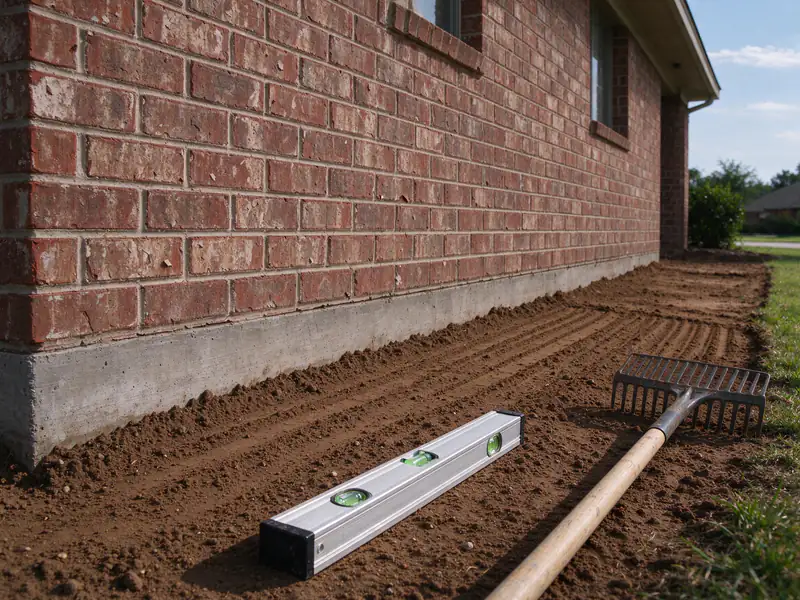
Keep finished soil below the weep holes and below the top of the slab, so water cannot enter the wall.
Do not bury the slab edge; it should stay visible.
Plan around trees and beds before moving soil, and avoid burying roots.
Where the slab already shows movement, a foundation engineer’s view comes first. Regrading removes a cause; it does not repair movement.
Neighbors and the law
Moving water is one thing; moving it onto someone else is another. Texas Water Code section 11.086 makes it unlawful to divert surface water in a way that damages another property. Grand Prairie bars concentrating runoff onto a neighboring lot without an easement or recorded release, and generally prohibits lot-to-lot surface drainage outside its estate zoning. A regrading plan respects the natural drainage pattern and sends water to an approved outlet, not over the fence. See neighbor water runoff in Texas.
Permits
Rules vary by city. Grand Prairie requires an earthwork permit when a grade or drainage pattern is altered. Dallas exempts single-family lots under two acres from a grading permit, but earthwork in a floodplain is reviewed. Southlake requires a drainage and grading plan for new houses and additions. University Park expects a plan before permit. For Irving addresses we confirm the requirement before work starts, and the permits guide collects the rules we have found.
How the work runs
811 locate before any digging.
Elevations shot across the yard to map the existing slope, the slab and the outlet.
Grading plan showing where soil is cut, where it is filled and where swales run.
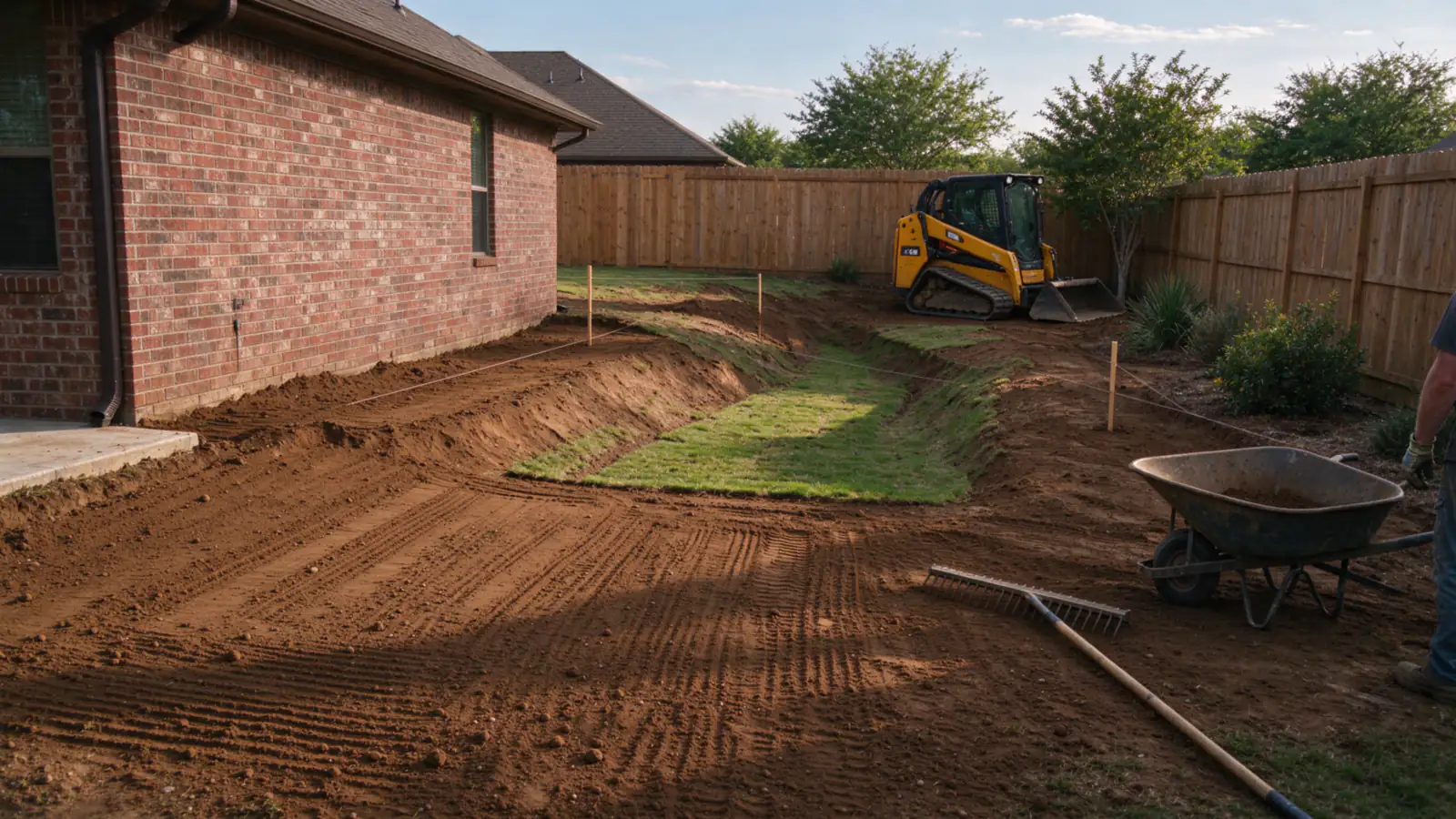
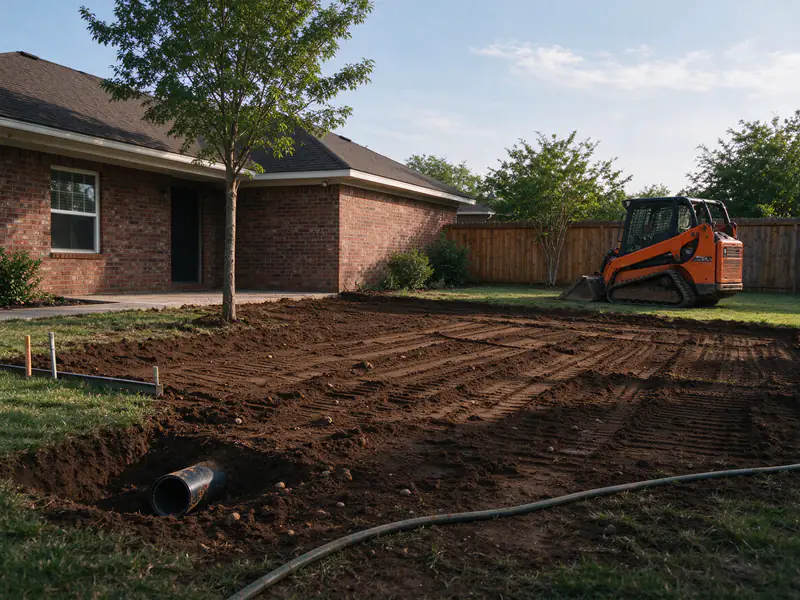
Strip and reshape with a small loader or by hand near the house, compacting fill in layers.
Check fall with a level or laser before finishing.
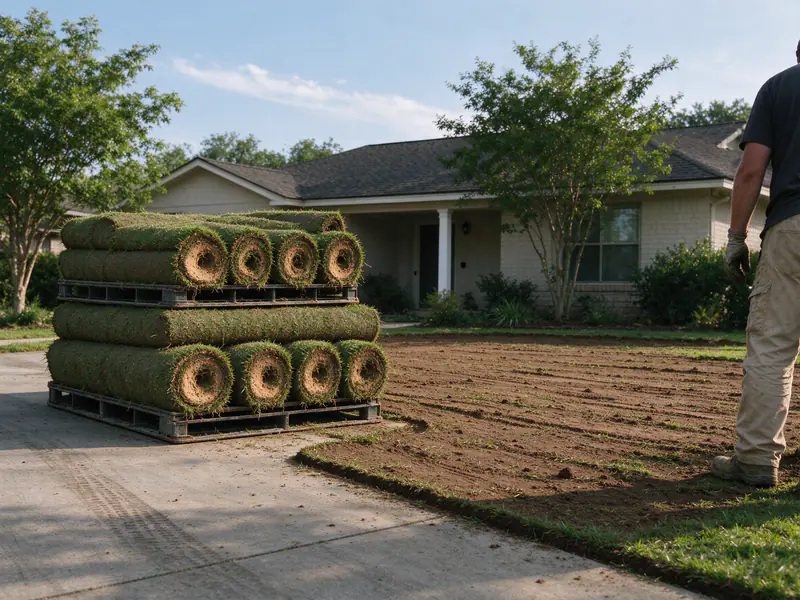
Restore with sod or seed, repair crossed sprinkler lines and haul off excess soil.
Rein Irving Drainage Company plans and manages each job; installation is carried out by licensed and insured drainage contractors we work with.
What it costs
Regrading varies too much for one honest range. The price follows the area being reshaped, how much soil has to be brought in or hauled off, access for equipment through gates and side yards, hand work near the slab, and how much sod and irrigation need to be restored. The regrading cost guide explains each driver, and the cost tool shows how they combine.
When grade is not enough
Some yards cannot be graded to an outlet: the lot is flat, the street is higher, or the low point is in the back with no alley. Those need a catch basin and pipe, or a sump where nothing lower exists. If water still stands after the grade is right, standing water in the yard walks through the other causes.
What this work looks like
BeforeAfter
Backyard regraded with raked topsoil sloping away from a brick house and a compact track loaderNew sod laid in a shallow swale along a cedar privacy fenceSlab edge exposed above freshly raked soil sloping away from a brick wall with a rake and levelPallets of rolled sod beside a freshly graded front lawn
Questions people ask
How much should the ground slope away from a house?
The common residential code standard is 6 inches of fall in the first 10 feet away from the foundation, about a 5 percent slope. Lawns farther out need less, but the ground should keep falling toward an outlet.
Is a swale better than a French drain?
For surface water, often yes. A swale moves water that runs across the ground and costs less to maintain, while a French drain handles water moving through the soil. Many yards use a swale for surface flow and a short drain for one wet spot.
Can I just add topsoil to fill a low spot?
Filling a low spot moves water somewhere else, so it helps only if the new surface still falls toward an outlet. Piling soil against the house or against a fence often creates a new problem at the slab or at the neighbor's line.
What is a dry creek bed for?
A dry creek bed is a swale lined with river rock. It carries water in storms, resists erosion where flow is fast, and looks like a landscape feature the rest of the year. It still needs fall and an outlet like any swale.
Will regrading kill my lawn?
Areas that are cut or filled lose their turf, so regraded ground is re-sodded or seeded. Beds and trees inside the work area are planned around before any soil moves, since burying tree roots can harm them.
Ground sloping toward the house?
Send a photo from the corner of the house looking out across the yard.